Understanding your needs

Welding

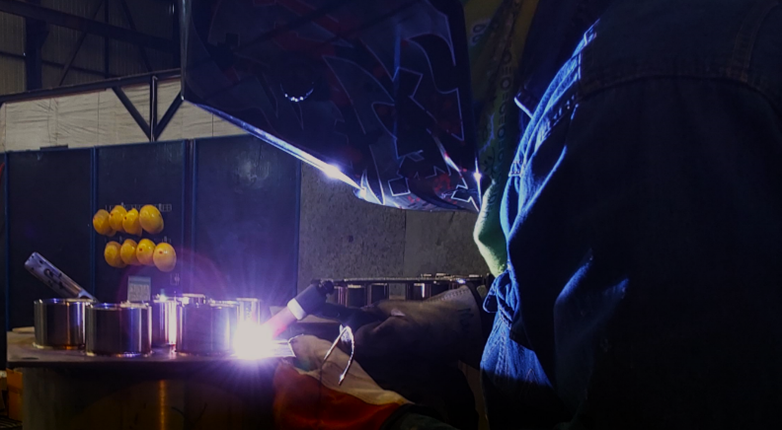
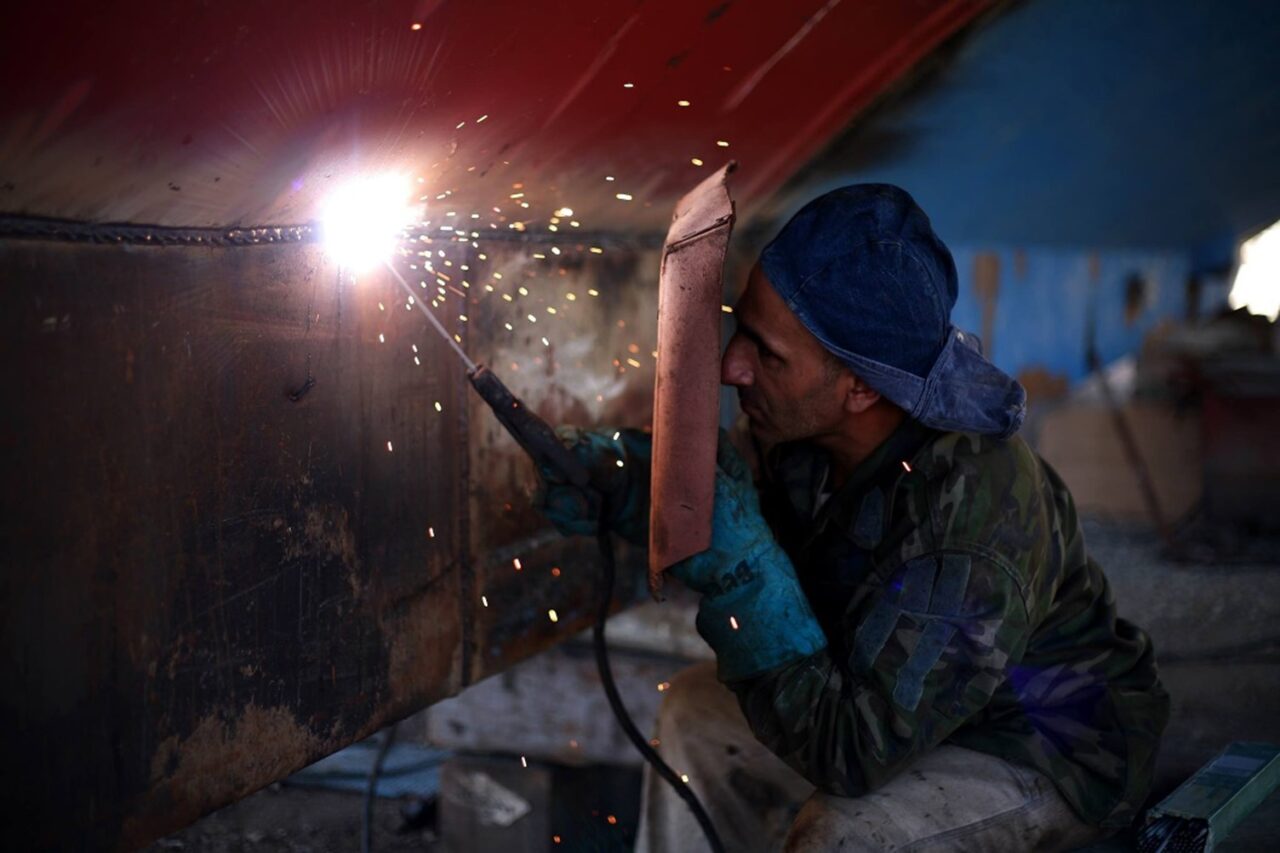
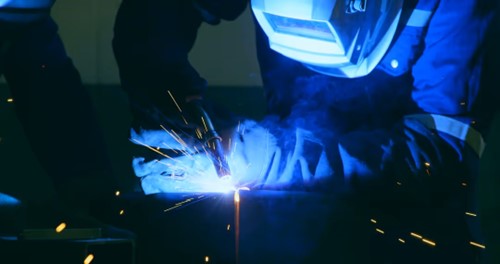
Welding Service and operation is the key strength of Evercon Group as we have 10+ years’ experience certified engineers and certified welders to do most of the types of welding operations and quality proven finishes.

This is the major portion of fabrication work and Evercon is an expert of Welding operations.

“Weld & build your life with Evercon. We serve you.”

Evercon Group

Welding Operation

Flux - Core Arc Welding (FCAW)

Gas-Tungsten Arc Welding (GTAW)

Submerged Arc Welding (SAW)

Shielded Metal Arc Welding (SMAW)

Gas – Metal Arc Welding (GMAW)

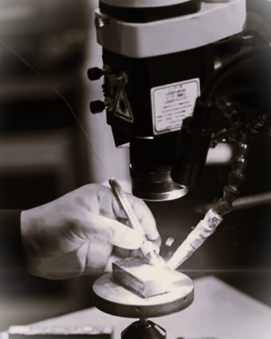
Precision Welding (Laser)

Evercon has the capacity and capability to accomplish all kinds of Arc Welding and High-Energy beam welding.

What is the welding process?

Welding is just a fabrication process to join similar or dissimilar materials by the application of pressure and/or heat.

Welding operation has a big spread branch of classification, and which defines the kind of application, weldment and technology required to do the welding.

Gas-Tungsten Arc Welding (GTAW)

GTAW is a process in which an arc has been established between a non-consumable tungsten electrode and the metals by heating the metals and results in the melting and joining of the metals.


The torch holds a tungsten electrode and connects to a shielding gas cylinder and one terminal of the power source. A water-cooled copper tube contacts the torch and connects to the welding cable from the terminal. This setup allows current to flow into the electrode and cools it to prevent overheating.

The torch directs shielding gas through its body and nozzle toward the weld pool to protect it from the air. GTAW provides better protection from air than SMAW because it uses inert gases such as argon or helium. For this reason, GTAW is also called tungsten–inert gas (TIG) welding. When joining thicker materials, operators feed a filler rod into the arc either manually or automatically.

Shielded Metal Arc Welding (SMAW)

SMAW establishes an arc between a stick-like, coated electrode and the metal, heating and melting the metal to join it. It is often called stick welding.


One cable connects the power source to the electrode holder, and another cable connects it to the metal workpiece. The covered electrode core, the core wire, conducts the electric current to the arc and provides filler metal for the joint. The arc generates heat and causes both the core wire and the flux covering the electrode tip to melt off like-as droplets. The molten metal collects in the weld pool and solidifies into the weld metal. The molten flux, on the other hand, floats on the surface and solidifies into a slag layer at the top of the weld metal.

Gas–Metal Arc Welding (GMAW)

GMAW establishes an arc between a continuously fed filler wire electrode and the metal, heating and melting the metal to join it.


GMAW uses inert gases such as argon and helium to shield the arc and the molten weld pool, which is why it is also called metal inert gas (MIG) welding. However, because non-inert gases—especially CO₂—are also used, GMAW is a more accurate name.

This process is the most widely used arc welding method for aluminum alloys. Unlike GTAW, GMAW uses Direct Current Electrode Positive (DCEP). This setup provides a stable arc, smooth metal transfer with low spatter, and good weld penetration. With DCEN or AC, however, metal transfer is erratic.

Flux-Cored Arc Welding (FCAW)

FCAW is similar to GMAW; however, the wire electrode is flux cored, i.e., the electrode is a metal tube with flux wrapped inside. The flux functions are similar to those of the electrode covering in SMAW, including protecting the molten metal from air.

Submerged Arc Welding (SAW)

SAW establishes an arc between a consumable wire electrode and the metal. Molten slag and granular flux shield the arc, and the heat melts and joins the metal.

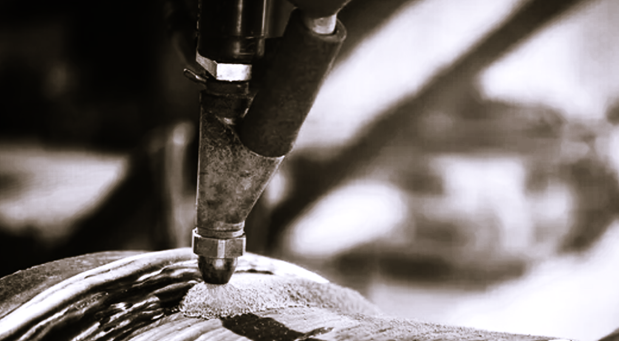
This process differs from general arc welding because the arc remains hidden beneath molten slag. A hopper travels with the torch and continuously supplies the slag. The slag already covers the arc, so no additional shielding is required.

Laser Beam Welding (LBW)

LBW is a process in which laser beam generates the heat that results the melting and joining of metals. A solid-state laser or a gas laser can produce a laser beam. In both cases, optical systems focus and guide the beam to achieve high power density. In a solid-state laser, manufacturers dope a single crystal with small amounts of transition elements.


In a CO₂ gas laser, electrodes connected to a power supply continuously excite a gas mixture of CO₂, N₂, and He, producing a continuous laser beam. In general, CO₂ lasers can achieve higher power than solid-state lasers.

Journey of Growth and Achievement

Evercon has experienced great growth over the years, but we’ve strived to maintain a family atmosphere where employees can thrive and succeed. Without a doubt, the people behind Evercon are the cornerstone of our company’s success.

Tell Us What You Need To Get Done.

Our success is built on strong, personal relationships. Give us a challenge, a budget, and a deadline — we’ll meet them all while maintaining the quality and cost-efficiency you expect.

Contact Evercon

How can we help
your business?

Are you ready to engage Quality Sheet Metal for your next welding or fabrication project? Feel free to contact us to get started.

    Thailand - HQ

    Finland

    Call Us

    +66 (0) 33 683 377

    Email us

    info@evercon.co.th